Centre for Analysis of Strategies and Technologies Subscription on Moscow Defense Brief
CAST News
06 August 2010
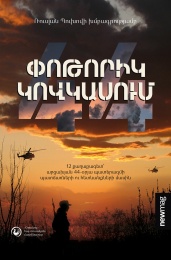
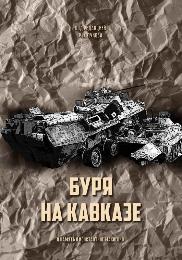
The Centre for Analysis of Strategies and Technologies released a new book – "The Tanks of August"

16 July 2010
# 3'2010 issue (May – June) of Eksport Vooruzheniy Journal is released.

10 June 2010
Moscow Defense Brief # 2, 2010 is released.

27 May 2010
# 2'2010 issue (March – April) of Eksport Vooruzheniy Journal is released.

23 March 2010
# 1'2010 issue (January – February) of Eksport Vooruzheniy Journal is released

26 February 2010
Moscow Defense Brief # 1, 2010 is released.

09 February 2010
# 6'2009 issue (November – December) of Eksport Vooruzheniy Journal is released

11 December 2009
Moscow Defense Brief # 4, 2009 is released

10 December 2009
# 5'2009 issue (September – October) of Eksport Vooruzheniy Journal is released

12 October 2009
Moscow Defense Brief # 3, 2009 is released
Read in the issue:

News archive

CAST comments
 
 29 January 2010
 The Russia-Georgia Conflict as Analyzed by the Center of Analysis of Strategies and Technologies in Moscow


Publication: Eurasia Daily Monitor Volume: 7 Issue: 15

(http://www.jamestown.org/single/?no_cache=1&tx_ttnews%5Bswords%5D=8fd5893941d69d0be3f378576261ae3e&tx_ttnews%5Bany_of_the_words%5D=Tanks%20of%20the%20august&tx_ttnews%5Btt_news%5D=35947&tx_ttnews%5BbackPid%5D=7&cHash=88e09810c5)


Publication: Eurasia Daily Monitor Volume: 7 Issue: 16

(http://www.jamestown.org/single/?no_cache=1&tx_ttnews[swords]=8fd5893941d69d0be3f378576261ae3e&tx_ttnews[any_of_the_words]=Tanks%20of%20the%20august&tx_ttnews[tt_news]=35951&tx_ttnews[backPid]=7&cHash=3ef1cf451f)


By: Jacob W. Kipp


Part One


The Center of Analysis of Strategies and Technologies (CAST) in Moscow has published a collection of essays devoted to the Russia-Georgia conflict in August 2008 (Mikhail Barabanov, Anton Lavrov, Viacheslav Tseluiko, Tanki augusta: Sbornik statei Moscow: Tsentr Analiza Strategii i tekhnologii, 2009., 144 pp., PDF: www.cast.ru/comments/ ). In a time when the discussion of fourth generation warfare and counter-insurgency seems to be the sole preoccupation of Western militaries, the title of this work appears quaint and anachronistic. Do the Russians not understand that the era of armored warfare is over and the tank has no future on the battlefield? Upon reading this book, however, the authors' point becomes quite clear. Both the Georgian and Russian armies had armor as their basic combat power. This was still warfare of the industrial era, apart from the presence of UAV’s. Neither side could afford a protracted struggle. Georgia gambled on a Blitzkrieg of South Ossetia, and the Russian government understood the risks of a protracted war that threatened to bring in foreign military intervention. Both sides were driven by political objectives. The government wanted to use military means to take the South Ossetian capital Tskhinvali, to undermine its claim of independence and thereby strengthen Georgia’s sovereignty. Russia intervened to punish the Saakashvili government and undermine its legitimacy at home and abroad. The three authors from CAST in Moscow bring their considerable expertise to the analysis of the background, conduct, and consequences of the Five-Day Russian-Georgian War of August 2008.

Viacheslav Tseluiko, an analyst from Kharkov, Ukraine, addresses Georgian military reform under Saakashvili, emphasizing the decision to follow a Western organizational model and procure arms and equipment from abroad. The weapons transfers listed in the book, accelerated after Saakashvili became president, involved deliveries of Soviet models of armed vehicles, artillery, radar and electronic warfare systems from Ukraine, the Czech Republic, Bulgaria, Bosnia-Herzegovina, and Uzbekistan. Other states providing arms included Israel, Turkey, Greece, and the United States. Israel supplied advanced UAV technology and air defense systems. Turkey delivered light armored vehicles. This choice of arms and organization is significant not only for the political direction of Georgian policy, but also because the Russian armed forces faced a Western-style army for the first time, and the authors emphasize the fact that this is of considerable importance in assessing the course and outcome of the war. On the basis of a review of Georgian national security statements, including the National Security Concept, Threat Assessment Document, National Military Strategy, National Defense Review, and Ministry of Defense Vision Statement, he emphasizes that the central purpose of this rearmament, and military reforms under Saakashvili, was to restore the territorial integrity of Georgia. While this had been a goal of the Georgian state since the fighting that led to the separation of Abkhazia and South Ossetia, Saakashvili was eager to achieve this goal by military means as expeditiously as possible. Saakashvili ordered the attack even though the best-trained unit in the Georgian army, the 1st Infantry Brigade, had deployed to Iraq in support of counter-insurgency operations. Thus, Tseluiko presents the attack upon South Ossetia as a coup de main, a rapid attempt to occupy Tskhinvali and isolate the theater before meaningful counteraction could be initiated by Russia, as the protector of South Ossetia. This strategic choice proved to be both a military and political disaster for Georgia and its government. The Russian response, as Tseluiko makes clear, was well planned and timely. The speed and power of the Russian response underscored what were basic contradictions and failures in Georgia's military preparations. These included doctrinal contradictions, unstable planning, weak training of cadres, frequent purges of command personnel on political grounds, and the associated unpreparedness of senior commanders to conduct operations. The Georgian forces had devoted considerable training time to counter-insurgency operations, but the Georgian government asked its armed forces to execute a rapid and decisive combined arms operation. In the face of the decisive Russian counter-attack, the engaged forces began a withdrawal that quickly turned into a rout, and the national system of total mobilization—which was supposed to deploy 100,000 additional combatants—brought no infusion of combat power to stem the tide.

Anton Lavrov’s chronology of the conflict begins with an assessment of the forces of the contending sides and their operational plans and reveals one of the core problems of Georgian defense preparations. While the United States provided training assistance to the Georgian Army, it focused on preparing Georgian units for counter-insurgency operations in Iraq and did not prepare the army to conduct large-scale combined arms combat operations, which Saakashvili's arms purchases had enabled and which would be required to defeat Russian intervention. Lavrov depicts the armed forces of both Abkhazia and South Ossetia as inferior to those of Georgia’s reformed army, but leaves no doubt that the most capable military force in the regions were those of Russia’s North Caucasian Military District, especially its 4th Army. These forces had fought in the Chechen wars and were kept in a high state of operational readiness. Their exercises over the preceding years were conducted to demonstrate a capacity to intervene in the face of unrest in the region, including military intervention by Georgia against Abkhazia and South Ossetia. These preparations do not seem to have been adequately assessed by the Georgian political and military leadership, which assumed that Russia would not intervene or that its intervention would be delayed by diplomatic attempts to stop it. In either case, they did not plan for a speedy Russian counter-attack. Given the possibility of blocking entry from the north by attacking and closing the Roki Tunnel and the vital Trans-Caucasus highway, the Georgian leadership might have hoped for both political and tactical delays slowing the appearance of Russian combat forces at Tskhinvali. However, according to Lavrov, Russian intelligence had gained a good picture of the Georgian plan, but not the exact date of attack and, therefore, the Russians elaborated contingency plans. This included keeping two battalions of motorized infantry in the vicinity of the tunnel as a rapid- reaction force with the task of moving to the defense of Tskhinvali under supporting air cover. Moscow chose the course of fighting and diplomacy at the same time. Its troops were moving into South Ossetia as the Russian Foreign Ministry asked for a special session of the UN Security Council. Furthermore, the critical tunnel was not closed and Russian follow-on forces reached Tskhinvali in numbers before the Georgians could establish de facto control to support their de jure claim of sovereignty. As Lavrov's chronology makes clear, any chance of Georgian success was lost and the Georgian military fell back upon improvisation, for which it was ill prepared.

Lavrov devotes much of his chronology to the events of the preceding week before the fighting. He presents these as border incidents followed by exchanges of gunfire and measures by each side to prepare for possible combat. The Russian peacekeeping contingent of two battalions in Tskhinvali was brought up to full strength and a higher state of combat alert. As tensions increased over the week, Saakashvili decided to mount an attack upon Tskhinvali and issued the orders for the attack at 1430 on August 7. By late afternoon, the fighting on the approaches to Tskhinvali had escalated from rifles, machineguns and mortars to include self-propelled artillery and tanks. In the evening, Saakashvili announced a unilateral ceasefire on television and firing trailed off on the line of contact for the next several hours. However, from high ground in Tskhinvali, Russian peacekeepers and South Ossetian defenders could observe the movement of Georgian troops toward Tskhinvali. About 12,000 defense and interior ministry troops were assembled for the assault and at 2330 the Georgian artillery brigades received their orders to open fire in support of a general offensive toward Tskhinvali. At 0030 on August 8, General Mamuka Kurashvili announced to Georgian mass media that Georgian forces had come under attack and that he had ordered the imitation of operations to “restore constitutional authority in the zone of conflict.” Shortly after midnight on August 8, Russian forces in the vicinity of Roki Tunnel received orders from the General Staff to advance into South Ossetia. At about 0100 the Russian Defense minister Anatoliy Serdyukov informed President Medvedev of the Georgian assault and gained authorization for executing the existing contingency plan for the defense of South Ossetia. The two battalions that were already to move into South Ossetia were ordered to gain control of the highway between the Roki Tunnel and Tskhinvali. The main Russian force received their orders to deploy at about 0300. This included units in the North Caucasus as well as elements of the 76st Airborne Division (Pskov).

Georgian efforts to isolate the battle around Tskhinvali from Russian intervention failed. A Special Forces group that was supposed to infiltrate and attack Roki Tunnel were stopped at the South Ossetian border and driven back. At 0700, four Georgian Su-25 attacked the Russian advanced column near the key bridge at Gufta, inflicting casualties on that force, but not damaging the bridge. The appearance of Russian fighter aircraft over the theater forced the Georgian Air Force to give up further bombing raids by fixed-wing aviation, thus leaving the Russian deployment largely undisturbed from the morning of August 8. Thus, the chances of success of the coup de main against Tskhinvali were already slim by the morning of the first day. Georgia had failed to achieve surprise and to isolate the battlefield from Russian re-enforcements. Russia had moved decisively to intervene. Having failed to achieve the coup de main, Georgian forces spent the second day of the war attempting to take Tskhinvali by storm before the Russian forces could arrive in mass.

Meanwhile, Russian forces extended the air war into Georgia proper and prepared to deploy forces into Abkhazia, opening a second front in the war. A flotilla of the Russian Black Sea Fleet left Sevastopol to support this deployment and to establish sea control along the Georgian coast. On August 9, Abkhazian forces with Russian support attacked Kodori Gorge and cleared Georgian forces from that key terrain. By August 10 the battle for Tskhinvali had turned into a rout with Georgian forces retreating and Russian ground forces entering Georgia proper and advancing on the key city of Gori. Late on August 12, six Georgian Mi-24 Shtrumovik helicopters attacked a Russian column near Pkhvenisi, inflicting slight damage. That proved to be the last organized effort by Georgian aviation to stop the Russian advance.


Part Two


The long-term military implications of the Russian-Georgian war are addressed by Viacheslav Tseluiko. He warns that the popular conclusions regarding the weakness of the Georgian army during the conflict should not be taken as decisive evidence of the inability of Georgian forces to counter Russian intervention. The Georgians seem to have learned some valuable lessons from their defeat. He devotes considerable attention to the further transformation of the Georgian armed forces in the wake of the conflict and sees increased capabilities achieved over the course of the past year.

The Georgian government plans to undertake no large-scale deployment of forces outside of the country, except for a token force for operations with ISAF in Afghanistan. Given the poor performance of the Georgian air force and the observed weaknesses in the air defense system, priority has been given to improving air defense systems through acquisitions from Ukraine, Poland, and Israel. The Georgian navy, which suffered serious losses during the war, was abolished in October 2008, and its remaining cutters transferred to the shore defense forces of the army.

Tseluiko sees as a major reason for Georgia's defeat in August 2008 as the lack of preparation of its senior commanders, battalion and above, to conduct combat operations, and notes that the army has instituted a short course for the professional preparation of those officers to conduct combined arms combat. The bottom line of this assessment is that one year after the war the Georgian military, except for the navy, is actually stronger than it was in August 2008. This increased strength does not mean an enhanced capacity for a military coup de main against Abkhazia and South Ossetia. Mobilizing significant a reserve force in a pre-conflict situation is hard to conceal because of the actions involved (call-up, force assembly, and deployment). Reserve mobilization is one of the most overt manifestations of imminent threat, which signal the Georgian government’s perception of an imminent threat from Russian deployments and Tbilisi’s intent to invite diplomatic intervention to forestall hostilities. This logic depends upon the posture that Russian forces assume in the regions bordering Georgia.

In comparison, Tseluiko sees the Russian army as weaker one year after the Georgian War. Here he cites numbers of men under arms, and he calls attention to the decline in forces in the North-Caucasian Military District, which carried the primary burden of the war. These lower numbers take on significance when Tseluiko raises the treat of increased violence across the North Caucasus, not from an attack by Georgian regular forces but the appearance of armed bands, which could use Georgian territory as a base of operations, re-supply and reconstitution. This consideration speaks more to the increasing instability across the region than to a direct and immediate Georgian threat. Other reforms, however, reveal decreased capabilities in the North Caucasus: the cut in the number of attack aircraft assigned to the North Caucasian Military District by half and the reduction in the size of the Russian Military Transport Aviation, which has reduced the capacity of Russian airborne forces to deploy rapidly to the region.

In dealing with the Russian lessons learned from the Russian-Georgian War, Tseluiko points towards military reforms that are betting on qualitative improvements to compensate for smaller forces. Serdyukov has made that the clear direction of defense reform in the aftermath of the war. The author does not mention the restructuring of the armed forces on a brigade model, the plans for the acquisition of advanced technology nor the introduction of a network-centric form of warfare. His focus is on current combat capabilities in theater, and his bottom line is that the reforms have not yet weakened, but also have not strengthened Russian military presence in the region.

Turning to the actual situation on the ground, Tseluiko examines the changes in Abkhazia and South Ossetia and assesses their implications for organizing military operations. Turning to regional implications, he provides as assessment of the impact of the Russia-Georgia war on Azeri-Armenian conflict over Karabakh, and leaves the impression that Russian troop presence in Armenia is primarily directed at the intimidation of Georgia and could be undermined by a shift in the military balance between Azerbaijan and Armenia, which leads him to call for a major rearming of Armenia and increased Russian troop presence there.

Given the extent of the initial attention paid to Russian air losses in the war, Lavrov’s chapter on that topic should attract great attention. Lavrov cites those losses as one of the most unexpected outcomes of the conflict for observers. The Russian defense ministry reported the loss of four aircraft (three SU-25 ground attack aircraft s and one Tu-22M3 strategic bomber). Saakashvili announce that Georgian forces had shot down 22 Russian aircraft. Two additional Su-24 fighter-bombers were never announced as combat losses by official Russian sources, but were verified by reports of downed aircraft. The confusion about Russian air losses follows from the usual fog and friction associated with combat. In this case, one of the contributing factors in this conflict was instances of loss by “friendly fire.” The first Russian Su-25 was shot down over South Ossetia late on August 8 by ground fire from South Ossetian forces. This missile attack was broadcast by Russian national television and reported as the shooting down of a Georgian Su-25. The first Russian aircraft lost to Georgian fire came on the morning of August 9 when the Tu-23M3 returning from a bombing strike came down from 12,000 meter altitude to 4,000 meters and was attacked by Georgian air defense missiles about 50 km north-west of Gori. The aircraft lost some of its major systems. Only the pilot and co-pilot ejected from the aircraft, but only the co-pilot survived the ejection and was captured by the Georgians. The bodies of the other two crewmen were recovered from the crash site later. The second success of Georgian air defense forces came later that morning when a Su-24 was shot down by an anti-aircraft missile south of Tskhinvali. Several cell phone cameras caught the attack and destruction of the aircraft. Both the pilot and co-pilot ejected from the aircraft, but the co-pilot’s parachute was damaged by fire from the aircraft and he died on impact. The pilot, who was wounded, was captured. About 1030 the same morning another Su-25 was hit by a SAM south of Tskhinvali during a strafing run and lost an engine. The pilot decided to return to base but when crossing the city of Tskhinvali he was hit by another SAM and lost his second engine. He was able to glide into Russian controlled territory, before ejecting and was recovered by a Russian search and rescue helicopter. It is still unclear who fired the second SAM at the aircraft. At that time, South Ossetian air defenders claimed to have shot down a Georgian Su-25 in the same region. Moreover, Georgian sources confirm that there were no Georgian Su-25 combat missions on that day, raising at least the possibility that the second Su-25 was also a victim of friendly fire. Later that day another Su-25 was shot down in the area of Gufta Bridge. At the time Russian air defense forces claimed to have shot down a Georgian Su-25 in the same area. The pilot of the lost Russian aircraft did not report any damage nor did he attempt to eject for the aircraft. Lavrov, on the basis of evidence of later inspection of the crashed aircraft by Russian officials concluded that the aircraft was probably shot down by a Russian ZSU-23 in a case of failure of the fighter’s indicator “friend or foe” system. The final aircraft lost in combat was a Su-24, which was shot down by friendly forces while it was escorting a Russian column on the Tskhinvali-Gori highway, when it was hit by a Russian SAM. The crew ejected and was recovered by a search and rescue helicopter. Lavrov's analysis makes a compelling case on two points: Russian air losses were concentrated in the period 8-9 August, with August 9 witnessing the heaviest losses of four aircraft, and that of the six aircraft lost, over half were the result of friendly fire. While this analysis reduces the effectiveness of the Georgian air defense system, it raises serious questions about the ability of Russian air control systems to manage the airspace of the battlefield. Lavrov goes as far as to suggest that the Russian air and ground forces actually fought two different wars without much knowledge of what was going on in the other sphere. This reveals the gap that exists between Russian forces’ capabilities and the proclaimed desire to conduct network-centric warfare as part of “new look” reforms.

The book concludes with two chapters by Lavrov. The first addresses in detail Georgian losses in men and equipment during the war. While the losses were significant, given the forces committed, especially in the heavy fighting around Tskhinvali, the impact of the losses was multiplied by the failure of the Georgian government to provide its troops and population with an accurate account of the fighting, which fed rumors of disaster. Defeat at Tskhinvali and the withdrawal became a rout, because of mounting fear of Russian air power and the rumors about the scale and speed of the Russian advance. Panic infected both the leadership of the government and soldiers and soon spread to the civilian population.

In the final chapter Lavrov addresses the basing of Russian combat forces in Abkhazia and South Ossetia after Moscow formally recognized their independence. The account provides a good picture of the difficulties faced by Russian units rebasing to the republics. Much of the effort was devoted to the expansion of existing military facilities, the establishment of new ones, and the pre-deployment of heavy weapons to those bases with the notion of sending in troops to man them in a crisis situation. These efforts included the development of a naval base in Abkhazia and the deployment of naval units belonging to the Russian border patrol. Air fields were also improved, including those supporting attack helicopters. Russian engineers devoted significant resources to the improvement of roads in South Ossetia in attempt to increase their all-weather utility. Lavrov emphasizes that these efforts undermined the combat effectiveness of the forces. Field service living conditions impacted on morale and brought increased desertions among the deployed units. Many completing their terms of contract service did not stay in the military because of disputes over deployment bonuses and because of difficult living conditions. Lavrov notes that in the major summer exercise, Kavkaz 2009, few Russian forces deployed in Abkhazia and South Ossetia participated and their part was limited to command-post staff exercises and the exercise did not involve the forces of the Republics of Abkhazia and South Ossetia. Current Russian forces in the Republics could not defeat a major Georgian offensive, but they could delay its advance while forces from the North Caucasus Military District and beyond deployed. Within the District Russian forces have been given a high priority for both brigade restructuring and the acquisition of new weapons. Both moves increase their combat capabilities and preparedness. Lavrov argues that these moves have reduced the risk of military provocations from Georgia.

Those interested in contemporary military affairs, military theory, and the security situation in the Caucasus will find this volume of value.


    © 1997-2010 Centre for Analysis of Strategies and Technologies
Äèçàéí:
Integrum-Design ©  2003